


Stop Guessing Your Wafer Temps
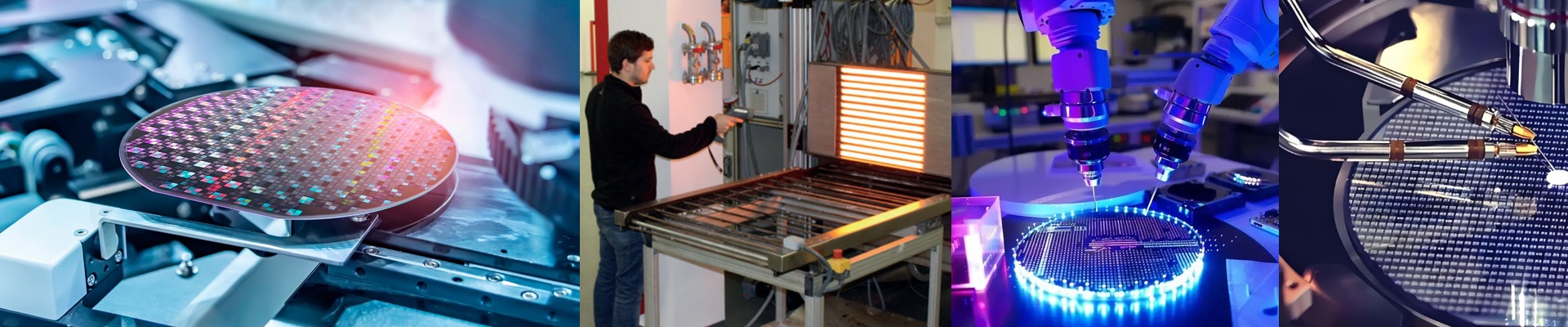
If you’re building a Smart Fab, the first thing you’ve got to do is ditch the contact thermocouples. They’re just too slow. Plus, the last thing you want is to risk contaminating a wafer because your sensor touched it. That’s why we lean on high-efficiency infrared (IR) systems. They don’t touch the surface, they work in real-time, and they give you the kind of deep data you actually need to keep your digital twins in sync.
The tricky part about IR
Here’s the thing: wafer tools move fast. We’re talking milliseconds. Our IR sensors pick up the electromagnetic radiation coming off the wafer, but it’s not a “plug and play” situation. Semiconductors are finicky. Depending on the dopant levels or the coatings you’re using, the emissivity changes. If you just plug in a standard 0.95 value and call it a day, your temperature readings will be off. And in this business, a small offset means a ruined batch. We use adjustable compensation to make sure the numbers are actually true.
Getting the data to move
A fancy fab is useless if the data gets stuck in a bottleneck. We’ve moved past those old analog 4-20mA loops. They’re relics. Instead, we use digital interfaces that pipe raw thermal maps straight into your PLC or MES. It lets you watch the thermal uniformity across a 300mm wafer while it’s happening. If a hot spot pops up, you’ll see it and kill it before the wafer burns.
A few things to watch out for
It’s not all sunshine and rainbows, though. High-speed IR sensing creates a mountain of data. If your network bandwidth isn’t up to the task, you’ll get lag. And “real-time” data with a three-second lag isn’t real-time—it’s a history lesson. Also, be careful with your surroundings. IR sensors can get confused by reflections bouncing off the quartz walls inside the tool. We usually shield the sensor’s field of view. It’s a simple fix, but it ensures you’re actually reading the wafer and not just the inside of the chamber.