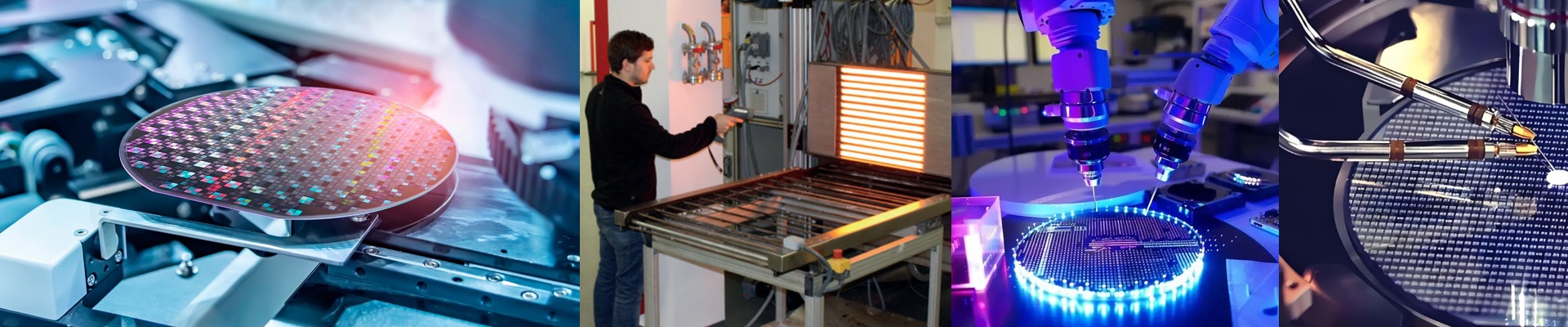
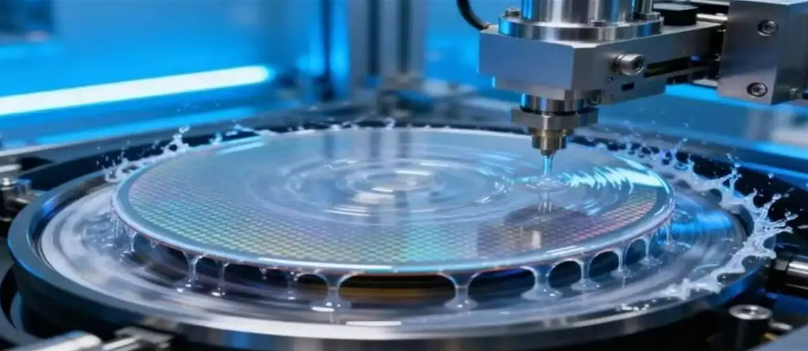
Out on the fab floor, a 300mm wafer sits, waiting to get its thermal signature dialed in. One hiccup in the soft bake or hard bake profile, and your photoresist linewidth starts to drift. You’re losing yield before the etch chamber even sees the wafer. We built our rapid thermal processing lamps to stop that drift right where it starts. What matters under the hood The lamps run short-wave halogen sources in a quartz assembly, so the energy is fast, directional, and under tight spectral control. Across the process zone, wafer-level uniformity holds at ±0.1°C, and temperature repeatability stays locked in cycle after cycle. The system is specced for cleanroom Class 1–100, and the component choices plus seals are engineered to keep particle generation at zero. Power delivery is calibrated to match the thermal budget of advanced nodes, so the ramp, soak, and quench behave exactly like the recipe calls for. Why it fits where we run it In the lithography track, the lamp stabilizes the soft bake and hard bake profiles that set your critical dimension control. In cleaning and drying integration, it cuts thermal cycle time without stressing films—throughput goes up, energy draw goes down. It runs 24/7 with zero unplanned downtime, and maintenance intervals are predictable. The payoff is fewer excursions, tighter distributions, and wafer-to-wafer consistency you can bank on. The practical details The lamp hits spec only when the chamber optics and cooling paths are clean and aligned. Contamination or misalignment will throw off your temperature map. Installation means matching the connector interface and power class to the host tool, and you still have to qualify the lamp to the exact process recipe. We supply the calibration curves and acceptance tests to keep integration straightforward, but treat the tool-level setup with the same rigor you’d apply to any process qualification.