
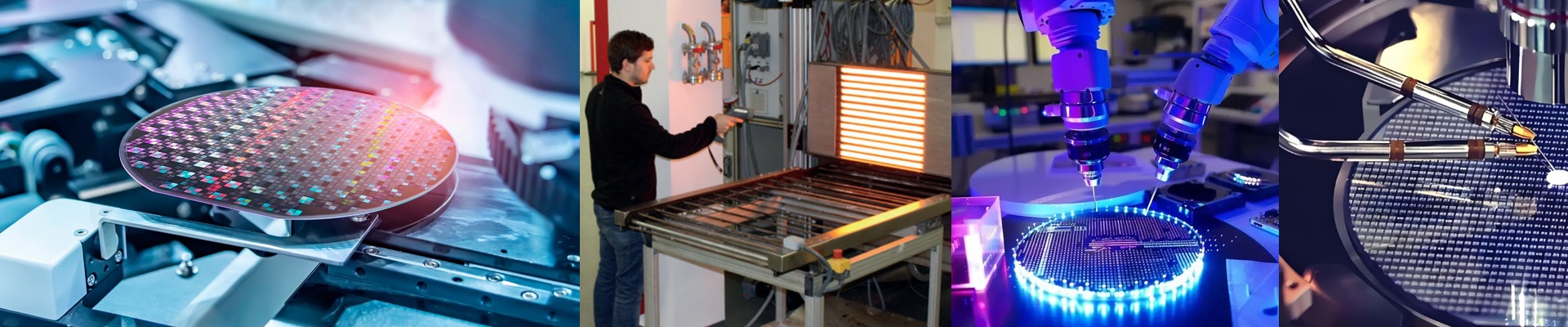

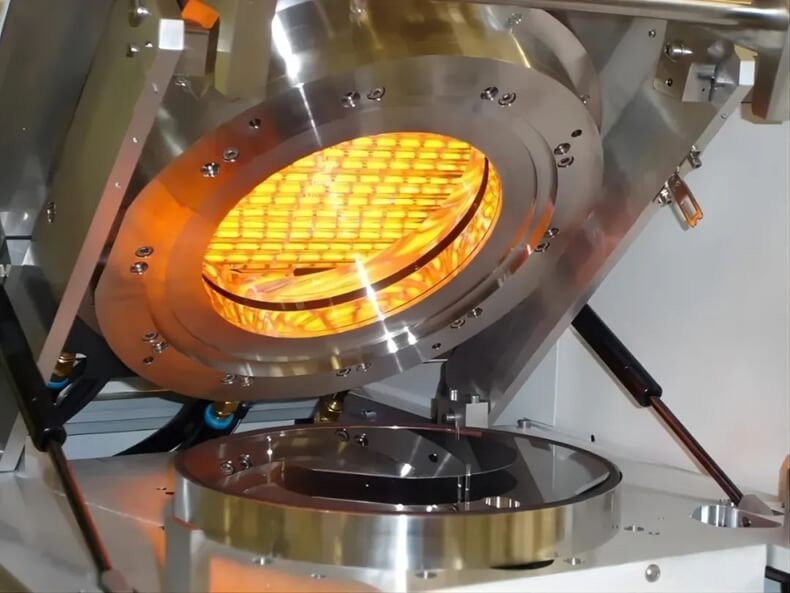
On the fab floor, you know the drill. A 0.1°C drift in bake temperature is enough to turn a photoresist profile into scrap. That’s why we built these wafer dryers for the moments where thermal budget, repeatability, and particle control actually decide yield. What matters, technically We hold ±0.1°C wafer-level uniformity across 150 mm and 200 mm substrates. NIR plus optimized airflow kills hot spots without overshoot. The quartz and halogen modules are calibrated to stay inside photoresist soft bake and hard bake windows, and the carbon-fiber-enhanced heaters give you fast ramp rates with low inertia. Cleanroom compatibility isn’t an add-on. You can spec Class 1–100 configurations, with zero particle generation and exhaust filtration that keeps contamination off the wafer. The control loop is tuned for repeatability, so every lot should match the last one. Why it works where it matters In lithography, keeping the photoresist bake within spec locks down critical dimensions, which cuts down line-width excursions and rework. In cleaning and drying, the process strips water off without marks, so defect density drops. For packaging, the same platform runs encapsulant and underfill curing with stable profiles. You get shorter cycle time and lower energy use. The payoff is predictable throughput, fewer scrap wafers, and less unplanned downtime. Things to keep straight on install and upkeep Match the exhaust duct size to the cleanroom pressure differential. If the ducting doesn’t line up, you’ll get turbulence that hurts uniformity. The unit also needs a dedicated power circuit to stay stable during those fast ramps. Plan on calibrating every 5,000 hours of lamp runtime to keep temperature accuracy tight. Set up right, the platform runs 24/7, delivering repeatable thermal performance across wafer drying, photoresist bake, and packaging curing.