
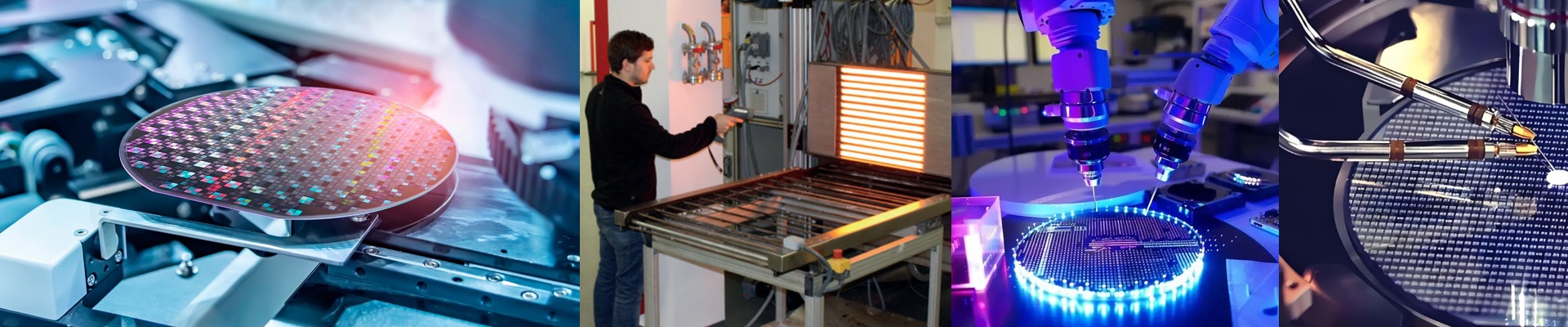


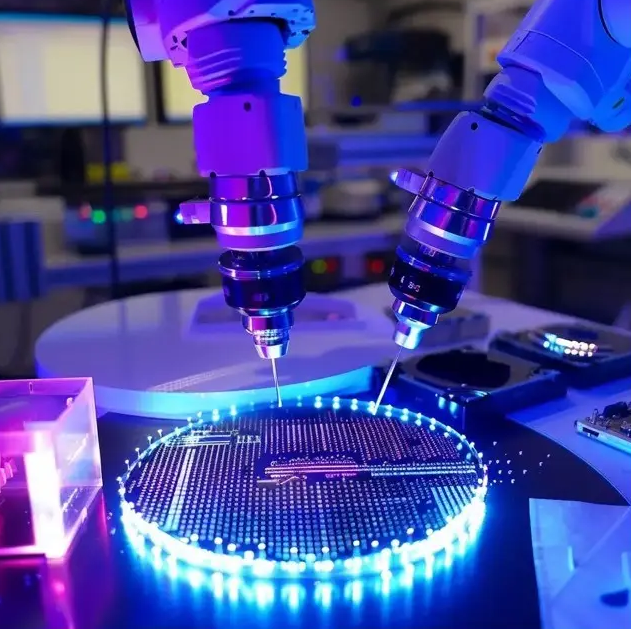
On the fab floor, it doesn’t take much to lose a lot. A faint watermark after cleaning, a bake profile that isn’t flat—one issue and an entire solar cell wafer lot can go sideways. Traditional drying lamps tend to drift, and that drift creates thermal gradients. You end up with distorted photoresist and particle contamination you didn’t see coming. The price tag shows up as scrap, rework, and capacity you can’t get back. What matters under the hood We built the solar cell wafer drying lamp around short-wave infrared (SWIR) halogen emitters in a quartz envelope. The energy is fast and directional, with tight spectral control. Across the active area, wafer temperature uniformity is held to ±0.1°C, and setpoint repeatability stays within ±0.5°C shift-to-shift. The system runs in Class 1–100 cleanrooms with zero particle generation, verified by in-situ particle monitoring. Output stability is specified to hold under 5% variation over 5,000+ hours, so it can keep running 24/7 with minimal recalibration. Why does this matter in lithography and photoresist processing? Because the soft bake and hard bake steps set critical dimensions and adhesion. With this lamp, the thermal budget stays stable, so line-width excursions drop and edge bead issues don’t keep popping up. Faster ramp rates shorten cycle time without pushing you past the glass transition window. You also use less energy compared to broad-spectrum sources, and the focused heat profile keeps substrate stress down. The payoff is consistent drying after cleaning, predictable photoresist behavior, and fewer defects that throttle yield. Here are the practical details you need. The lamp needs a dedicated, filtered power supply and precise optical alignment to the wafer plane. Retrofit kits fit most track platforms, but you still have to verify mechanical clearance against the tool’s chamber envelope. Expect a short warm-up to reach thermal equilibrium, and plan routine emitter inspection at the recommended service interval. When it’s installed right, the system keeps process discipline—repeatable, documented, and ready for audit.