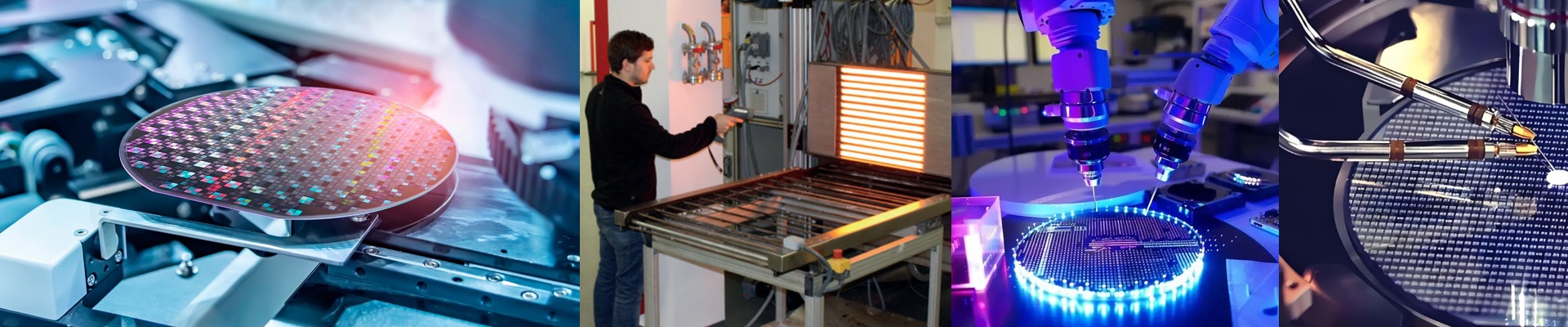
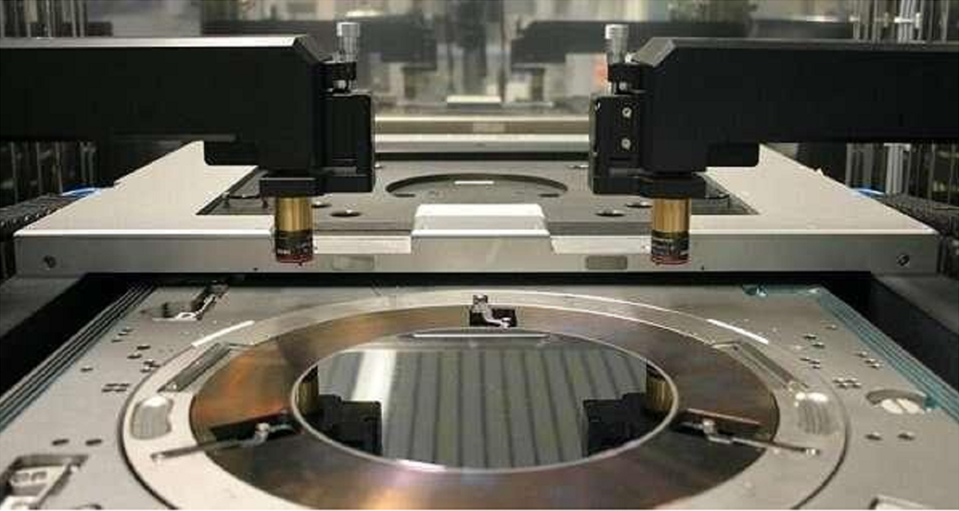
On the fab floor, a photoresist bake is never “just a temperature step.” It’s a thermal budget you’re signing off on. A 0.5°C drift in soft bake or hard bake will shift your critical dimension (CD) distribution. One particle event can scrap the lot. When the line is scheduled 7×24, the bake tool has to deliver the same thermal profile, shift after shift, without excuses. What matters, technically We run controlled atmosphere bake lamps that keep wafer-level temperature uniformity within ±0.1°C across the substrate. That’s what gives you consistent photoresist flow and solvent removal from edge to edge. The short-wave infrared (SWIR) emitters respond fast, hitting setpoint in seconds and keeping thermal overshoot off the underlying films. The chamber is built for cleanroom compatibility from Class 1 to Class 100, using low-outgassing materials and a particle-controlled airflow path that holds particle counts down even during continuous operation. Why it holds up in lithography Yield in lithography comes down to repeatability. These lamps hold bake temperature with a tight distribution over thousands of cycles, so CD mean and range stay in control without constant re-tuning. Fast stabilization cuts idle time between bakes, so throughput improves without adding thermal stress. Energy use is managed through efficient emitter coupling and tight thermal containment—operating cost goes down, but the process signature stays the same day after day. The details that bite you if you ignore them To get full performance, the lamp module has to match the chamber geometry and gas inlet layout. If you swap in a reflector or airflow baffle that isn’t matched, uniformity slips and particle generation goes up. Installation also needs a stable supply with clean dry air and properly verified exhaust routing—otherwise you risk local hot spots. Plan the integration early, then run the line with confidence.