



Getting Your Heat Right in a Smart Fab
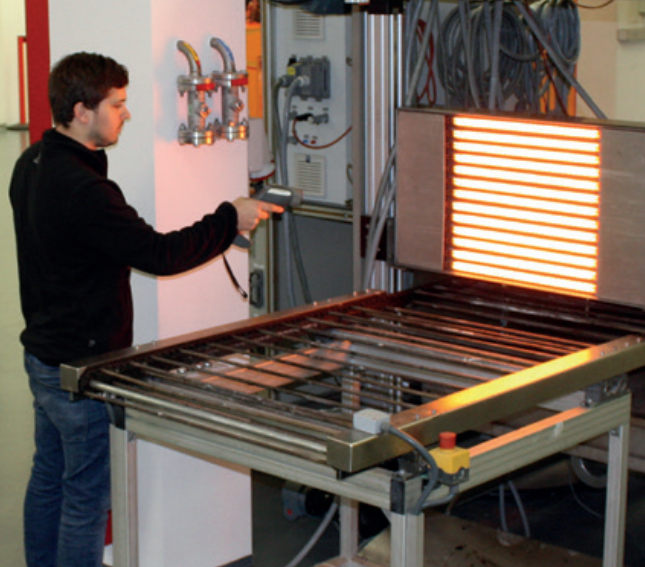
If you’re building a Smart Fab for Industry 4.0, you have to stop thinking about heat in bulk. The old way—just heating up a giant space—is a waste. You’re basically paying to heat the air, which doesn’t do anything for your product. That’s why we lean on high-efficiency infrared (IR) systems. Instead of waiting for the air to get warm, IR sends energy straight to the target. It’s direct. It’s clean. And it saves a ton of energy.
Making the Hardware Actually Talk to the Software
A digital production line is useless if the hardware is slow. If you use old-school resistive heaters, you’re dealing with a massive lag. You turn it on, and you wait… and wait. IR lamps are different. They hit the target temperature in seconds. This is where it gets cool. Because they react so fast, your PLC can tweak the power in real-time based on what the sensors are seeing. It creates a loop where the heat perfectly matches how fast your wafers or substrates are moving. No guesswork. Just precision.
Fitting it All Into the Cleanroom
Space is always a nightmare in a Fab. Every square inch costs money. We use short-wave IR emitters because they penetrate deep into the material. Since the heat goes deeper, you don’t need a massive heating chamber. You can pack more processing power into a much smaller footprint. To keep things running smooth, we pair these with digital power controllers using PWM (Pulse Width Modulation). Think of it like a dimmer switch for your heat. It lets you fine-tune the output without beating up the lamps, so they don’t burn out early and your batches stay consistent.
The Trade-offs (The Stuff No One Tells You)
Here’s the catch: high-density IR puts out some serious heat in a very small area. It speeds up your production, sure, but it puts a lot of pressure on your cooling. You can’t just wing it. You need to make sure your heat exchangers and exhaust systems can handle the “bounce-back” radiation. If your cooling is off, your surrounding electronics will start to cook. That’s a fast track to unplanned downtime. Also, do yourself a favor: use high-temp cabling. You don’t want your insulation melting the moment the emitter heads kick in.