
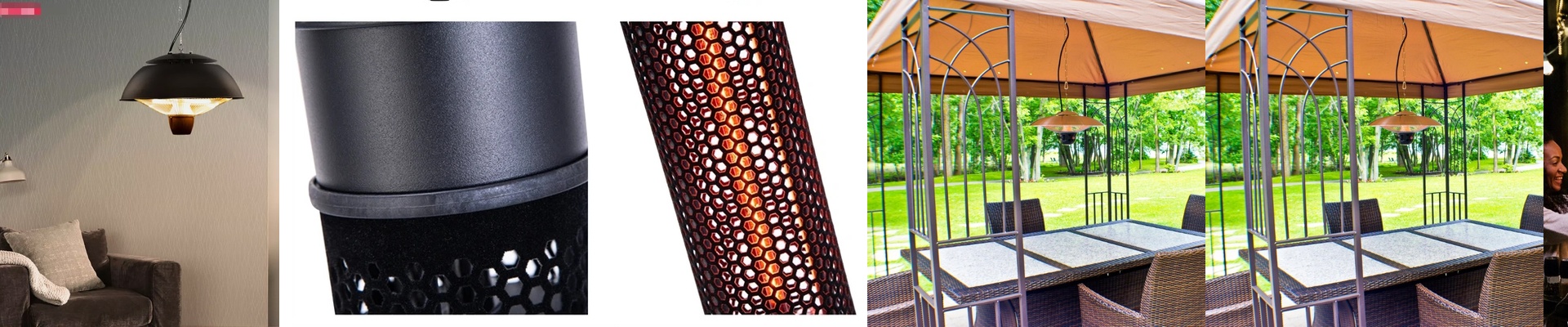
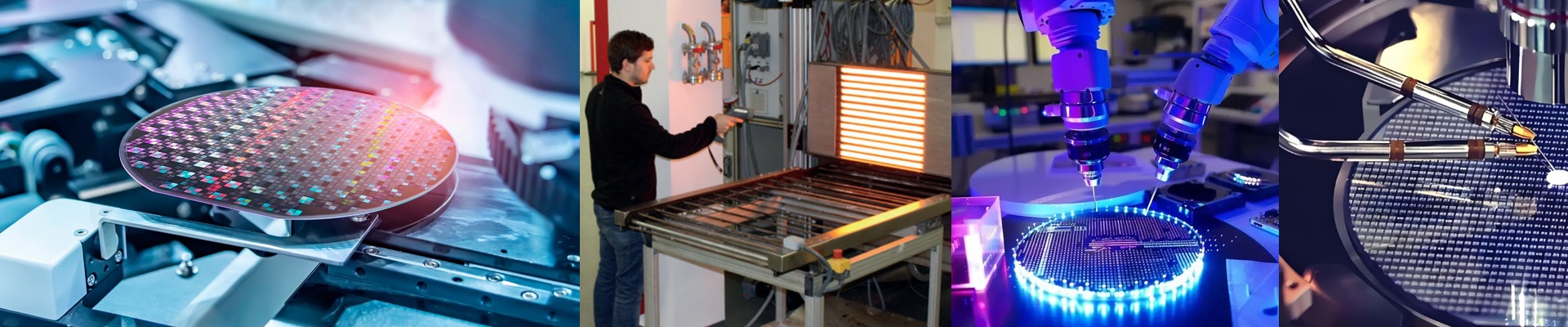

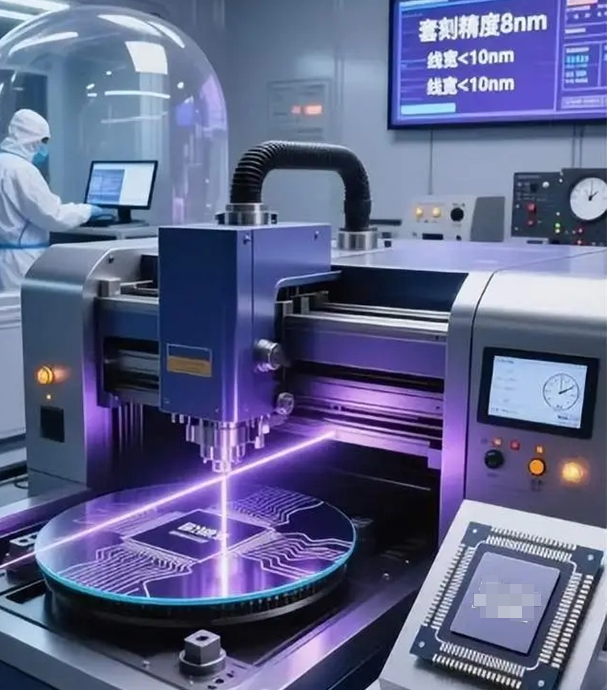
On the lithography floor, a 1°C drift during soft bake can shift the photoresist profile by nanometers—and that drift shows up directly as overlay error. We built our fab heaters to live with that reality, not fight it. As a Made in China fab heater manufacturer, we ship thermal modules that hold wafer-level uniformity within ±0.1°C across the bake surface, so critical dimensions stay in control. What matters under the hood We run a short-wave infrared design with quartz-halogen emitters. The heat is fast and dry, and the low mass means the temperature settles quickly. Closed-loop control keeps things on target, using calibrated sensors traceable to NIST standards. Repeatability is specified to ±0.2°C cycle-to-cycle. The build leans on high-purity materials and welded joints to keep outgassing and particle generation low, so the unit fits cleanroom Class 1–100 demands. Power density is tuned to match wafer chucks and hot plates, and we offer voltage and footprint options that line up with common OEM tooling. Why this lands in production Photoresist processing—soft bake, hard bake, and post-bake—lives or dies on a stable thermal budget. Our heaters hit the setpoint fast, keep overshoot down, and hold uniformity across the wafer batch. You can measure the payoff: tighter critical dimension distribution, fewer rework lots, and line yields that behave predictably. Energy use drops because the system heats on demand and cools quickly. Reliability is there for 24/7 operation, with fewer unplanned stops. What you need to get right Installation comes down to the thermal interface: chuck flatness, contact pressure, and emissivity. Even a small air gap will show up as localized non-uniformity. Run a short commissioning pass to map the temperature profile against your process recipe, then lock the calibration. The unit will perform as specified—but only if you treat the mechanical interface as part of the thermal system, not an afterthought.