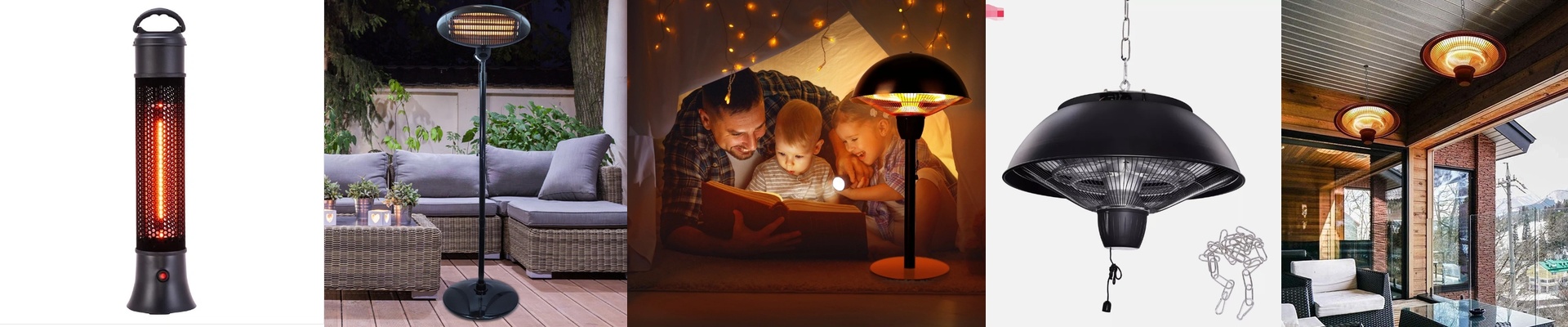
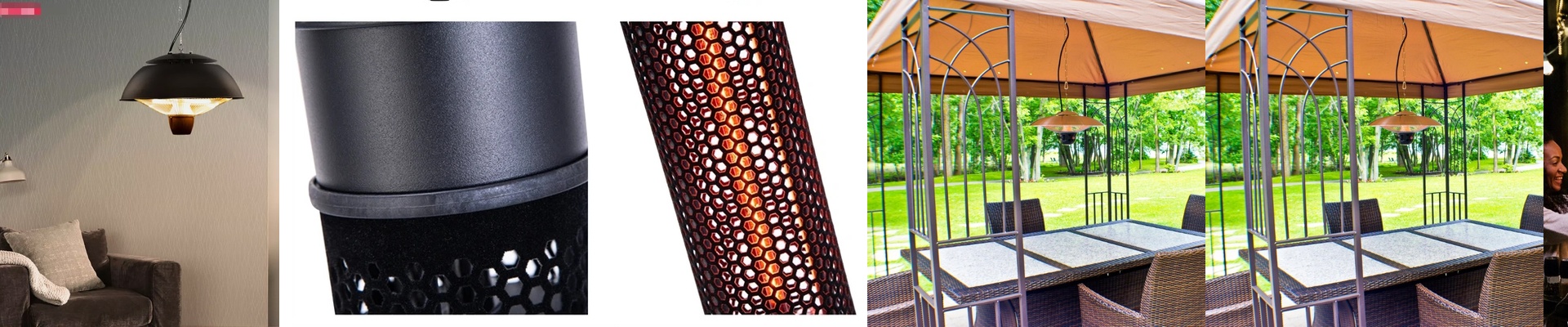
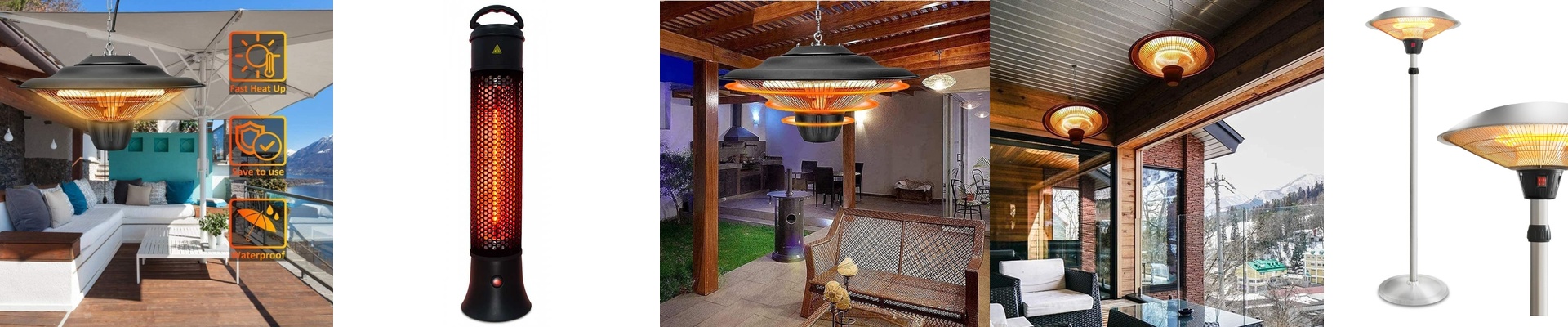
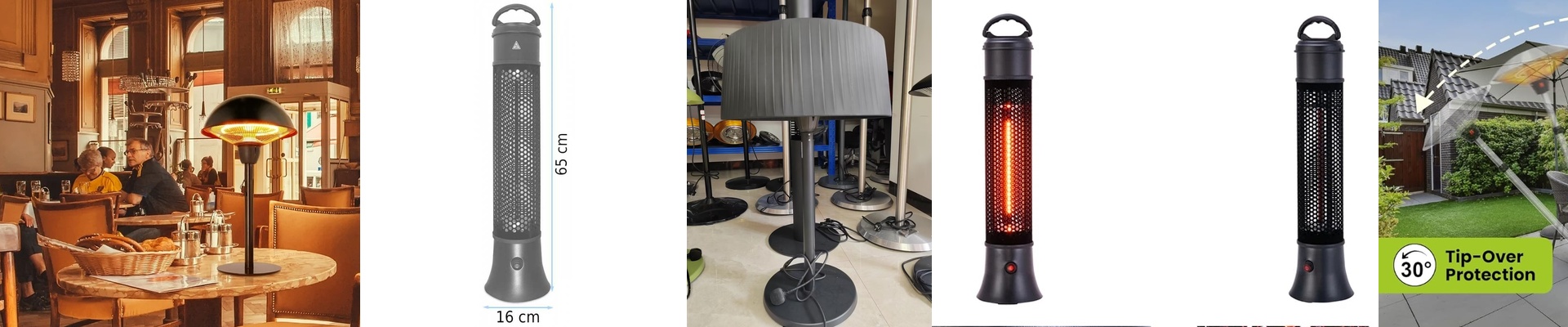

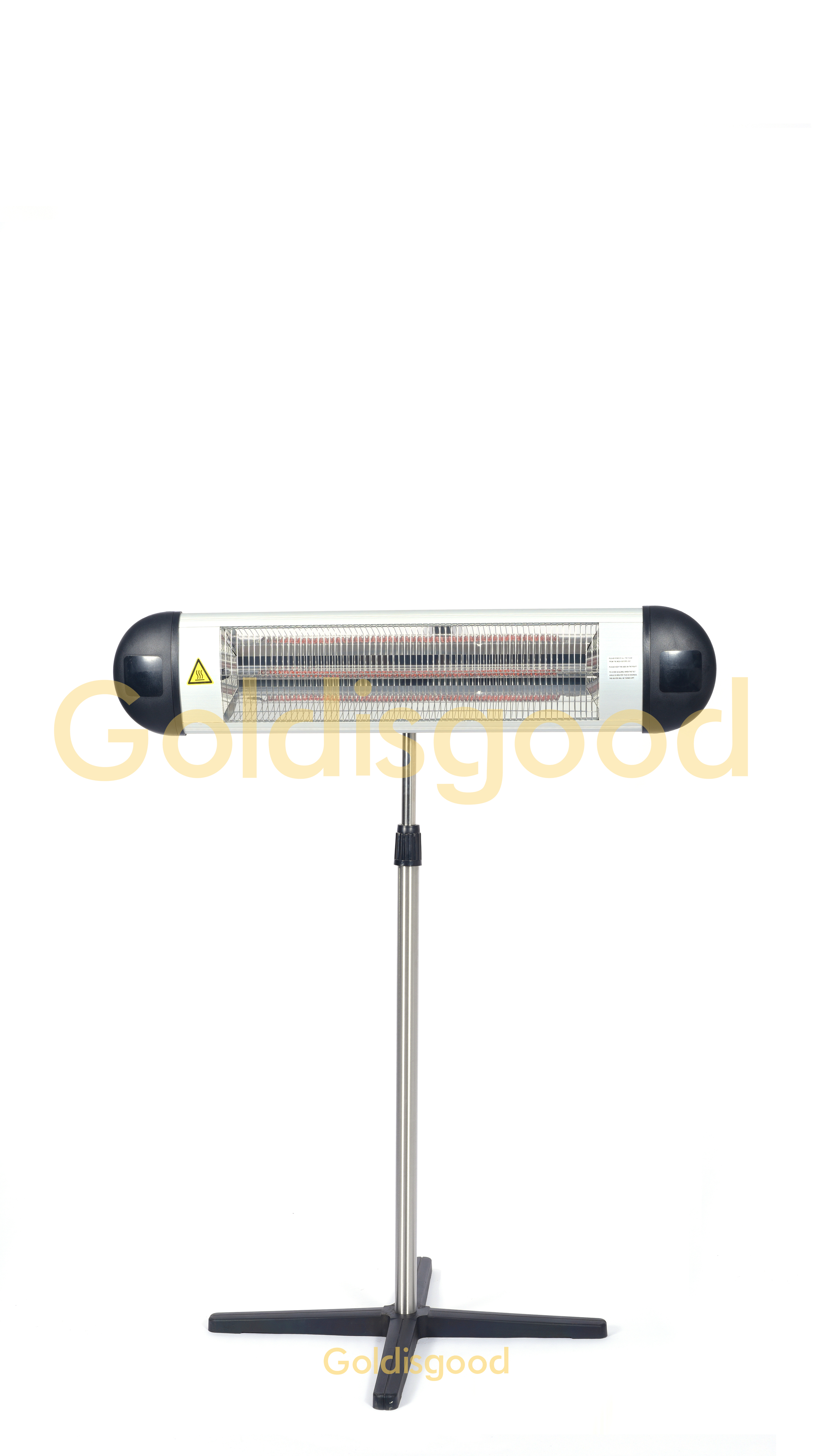
The minute the air gets that bite, your deck, balcony, or workshop turns into a place you pass through, not a place you stay. Step outside and the cold grabs your hands and feet before you can even settle in. Forced-air heaters move heat around, but comfort has to land on the people in the space—on you.
What matters under the hood
We build our infrared heaters around radiant heat, not blown air. The core runs on a durable carbon fiber element inside a sealed quartz tube, sending out a focused beam of infrared warmth that travels straight out. You feel it within seconds, the same way you feel sun on your skin. For steady comfort, an adjustable thermostat keeps output consistent, so you’re not constantly chasing the switch. For safety, tip-over protection shuts the unit down if it gets knocked over. And because these are meant for outdoor and workshop use, we design them with an IP rating to stand up to moisture and dust. Specs vary by model, but typical electric heaters in this class run on standard household voltage, with power levels sized for small patios, covered porches, and focused work zones.
Why this approach fits the spot
On the patio, infrared warmth keeps conversation going. The heater warms people and surfaces directly, so you feel cozy even when the air is cool—no noisy fan, no drafts. In the workshop, that same direct heat keeps hands and muscles comfortable, which can help you work with less hurry and more accuracy. Because the heat is targeted, you’re not throwing money at empty air. That focus pays off in energy use, especially in partially open spaces where heat escapes fast. And since it’s electric, there’s no odor, no open flame, and no fuel storage to worry about.
What to keep in mind
Infrared is immediate, but placement matters. Keep the heater at a safe distance from people and combustible materials, and aim it where you actually sit. It warms what it “sees,” so shaded corners can stay cooler. Also, the sealed design is tough, but strong wind can thin out comfort by dispersing the warmth. For best results, use the heater in sheltered outdoor spots or add wind protection. Clear the area, plug into a properly rated outlet, and you’re good to go.