



How We Build Infrared Heaters That Keep Your Cleanroom Spotless
Let’s be real: when you’re running a Class 100 cleanroom, a spec sheet doesn’t tell the whole story. What matters is avoiding the tiny things that can ruin a run—outgassing, stray particles, or film residue that sneaks in and wrecks everything. So we built our high-purity quartz infrared heaters around one simple idea: the heat source has to stay chemically inert and mechanically steady, even when you’re running at full power. We start with a quartz envelope that’s made to take thermal shock. It can ramp up fast, handle repeated on/off cycles, and still not crack. It also holds up against the chemical stress of the process atmosphere. The payoff? A heater that stays clean on the inside and stable on the outside, day after day.
Power, Voltage, and Geometry: Why the Details Actually Matter
Infrared heating comes down to matching power density to the target without pushing the system too hard. Our units run at high wattage in a compact footprint, so you get the intensity you need for fast, localized heating. We use high-voltage operation to cut down on current draw. That means smaller conductors, less heat in the wiring, and less strain on the terminal block. It also helps you keep the machine footprint smaller and the electrical layout simpler. But here’s the trade-off: higher voltage puts more stress on insulation, and installation needs stricter safety practices. Plan your clearances and guarding early, and you’ll save yourself headaches later.
Materials and Design: Quartz, Coating, and the R7s Choice
High-purity quartz keeps ion content low and organics minimal. That translates to low outgassing the moment the lamp hits temperature. The quartz envelope also stays optically clear in the infrared band, so more energy goes straight into the target instead of getting absorbed and re-radiated by the tube. The reflective coating isn’t just for looks. It’s a controlled thin-film layer that focuses the heat forward, stabilizes the beam, and keeps stray heat off surrounding parts. And the R7s connector? It’s the practical call for this form factor. It holds contact solid, handles the current well, and it’s a standard interface—so the lamp drops right in as a replacement in many fixtures. Maintenance becomes simple: swap the tube, relamp, and get back to work.
Cleanroom Use: Why Infrared Works, and What It Means for You
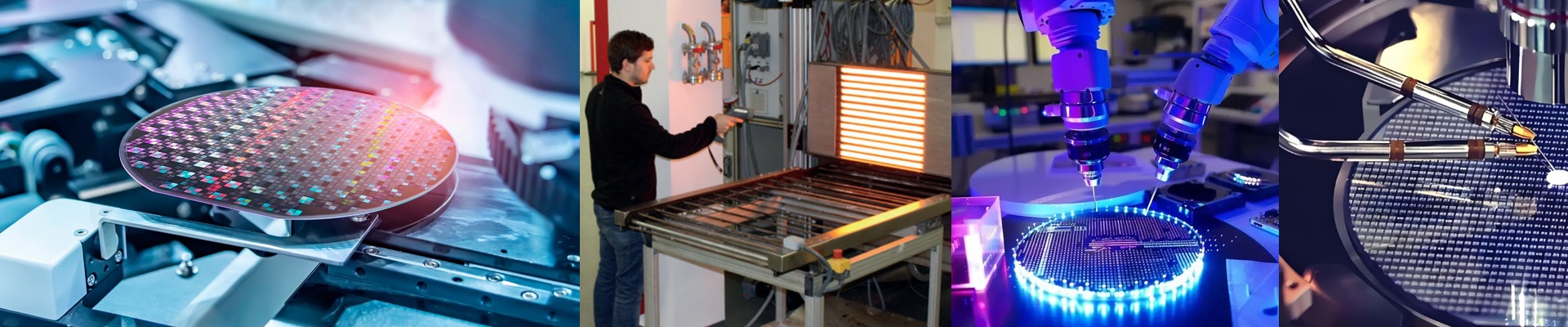
In environments where cleanliness is non-negotiable, infrared has an advantage over convection heating. It heats the product directly, without blowing air that can carry particles. The quartz envelope stays clean, and the directed heat pattern reduces hot spots and thermal stress on nearby components. For engineers, the result is the kind of consistency you can plan around: predictable uptime and repeatable process windows. You get fast response, stable output, and a heater that can handle production thermal cycling without drifting out of spec. Just make sure your fixture can manage the heat density, and that your cooling and shielding are set up for the load.