

Making Your Gazebo Heater Actually Last
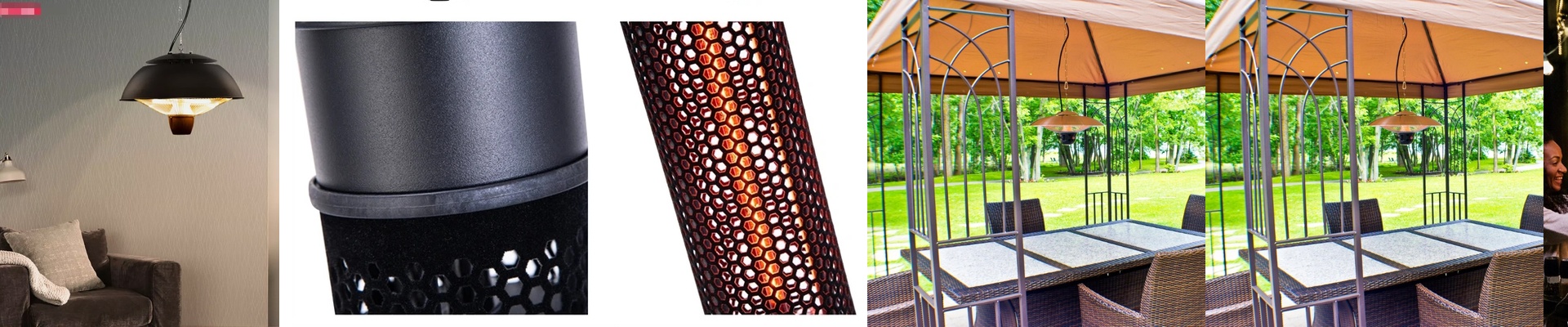
Putting a 1500W infrared heater in a gazebo sounds like a great idea until you realize you’re basically placing a high-powered electrical device in a giant wind tunnel. Between the humidity, the morning dew, and those random rain splashes, most heaters don’t stand a chance. If the housing isn’t built for the outdoors, you’re looking at a short circuit or a dead element in a matter of weeks. We focus on two things to stop that from happening: fighting fog and blocking splashes. The battle against moisture Outdoor heaters live through some wild temperature swings. Think about it: you’ve got a 1500W element cranking out heat, and then it shuts off. The air cools down fast. That’s when condensation starts creeping onto the quartz tube and the internal reflector. To stop this, we use specific coatings and sealed gaskets. It keeps the moisture away from the electrical junctions. Without this, you get “fogging,” which blocks the heat. Even worse, water droplets on the emitter create hot spots. Those spots stress the quartz until—snap—it cracks. Dealing with the rain Let’s be real: a gazebo isn’t a sealed room. Rain drifts in. Humidity seeps through the ceiling. We design the chassis to basically shove water away from the wiring and the power supply. By keeping the internals dry with a splash-proof seal, we stop oxidation from eating the contact points. When those points oxidize, resistance goes up. That leads to overheating at the terminals and, eventually, a total burnout. The trade-off Here’s the catch. Adding all these seals and protective layers makes the heater a bit bulkier. It also means the internal transformer doesn’t get as much passive airflow. Because of that, you’ve got to make sure your ceiling bracket leaves enough room for the heat to move upward. If it’s tucked too tight, you’ll likely trip the thermal cutoff right when you’re trying to stay warm. But it’s worth it. Proper sealing means your heater doesn’t just survive the winter—it keeps putting out the same amount of heat season after season. You get a piece of gear that can take a beating from the weather without losing its punch.